**How Shopify and Ecommerce Ad Spy Helps Online Stores Build Smarter Campaigns?**
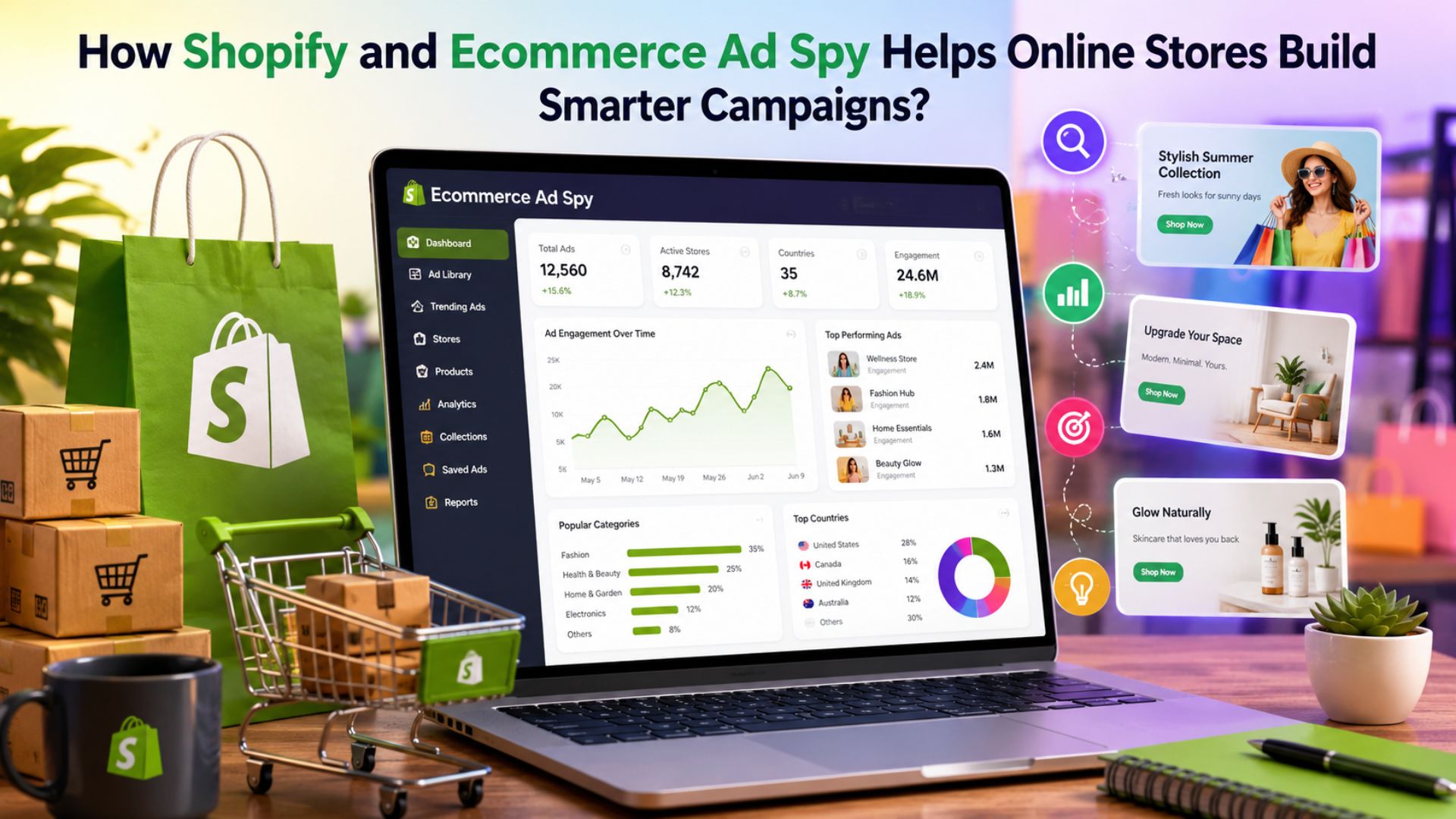
Running a successful online store requires more than offering quality products. Store owners also need to understand what attracts customers, which promotional messages gain attention, and how competing brands present their offers. ***[Shopify and Ecommerce Ad Spy](https://poweradspy.com/shopify-and-ecommerce-ad-spy-best-picks-for-affiliates/)*** can help marketers study advertising activity and identify useful patterns without relying entirely on guesswork. By observing competitor creatives, offers, messaging styles, and campaign themes, ecommerce businesses can discover new ideas for improving their own marketing strategies. The goal is not to copy another brand but to understand the market, recognize opportunities, and make more informed decisions when developing future campaigns.
**Understand Competitor Advertising Patterns**
Competitor research can reveal how other online stores communicate with their audiences. Marketers can examine recurring themes, product presentations, promotional language, and creative formats to understand what is common within a particular market.
For example, a fashion store may notice that competing brands frequently highlight limited-time discounts, seasonal collections, free shipping, or customer benefits. These observations can help marketers understand which promotional angles are being emphasized across the industry.
Studying patterns over time can also be valuable.
**Discover Creative Ideas for Product Promotion**

Advertising creativity plays an important role in ecommerce. Product images, videos, headlines, demonstrations, testimonials, and lifestyle visuals can influence how shoppers perceive an offer. Researching competitor advertising inspires marketers to explore different creative directions while supporting broader ***[marketing goals](https://poweradspy.com/how-to-set-marketing-goals/)***.
A marketer might discover that similar products are being promoted through short videos, customer-focused storytelling, product comparisons, or problem-and-solution formats. These observations can encourage the creation of original content using a different concept, visual style, or presentation.
The objective should always be inspiration rather than duplication. Businesses can take useful lessons from existing campaigns while developing visuals and messaging that reflect their own brand identity, products, and customers.
**Analyze Offers and Promotional Strategies**
Price promotions are common across e-commerce, but brands use them in different ways. Some emphasize percentage discounts, while others promote bundles, free delivery, seasonal deals, loyalty rewards, or limited-time offers.
Researching these approaches can help store owners understand how competitors structure promotions. It may also reveal opportunities to position an offer differently. For instance, if several competitors focus heavily on discounts, another business might emphasize product quality, convenience, customer service, or added value instead.
**Identify Trends Before Planning Campaigns**

Ecommerce advertising changes quickly as customer preferences, platforms, and creative formats evolve. Keeping track of advertising trends through ***[Competitor Ad Spy](https://pad.codefor.fr/s/HuXhEY3qrO)*** can help businesses avoid relying on outdated approaches.
Competitor research may highlight growing interest in certain video styles, visual formats, messaging themes, product categories, or seasonal promotions. When several brands begin adopting similar approaches, marketers can recognize a potential market trend. These insights can become useful during campaign planning. Businesses can prepare creative assets, landing pages, product offers, and promotional calendars before demand reaches its peak. Early preparation can make marketing activities more organized and responsive.
**Improve Audience and Messaging Decisions**
Understanding what competitors communicate can help marketers think more carefully about their own audience. Different brands may emphasize different customer concerns, such as affordability, convenience, product quality, speed, sustainability, or exclusivity.
Comparing these messages can reveal gaps in the market. If competitors repeatedly focus on one benefit while overlooking another important customer concern, a store may have an opportunity to create a more distinctive message.
This research can also help businesses refine headlines and calls to action. Instead of making assumptions about what shoppers want, marketers can use market observations as one source of information when developing their messaging strategy.
**Turn Research Into Original Campaign Strategies**
Research becomes valuable when businesses transform observations into action. After collecting advertising insights, marketers should organize them according to creative themes, offers, products, audiences, and campaign objectives.
The next step is to identify patterns that are relevant to the business. Some ideas may work well for awareness campaigns, while others may be more suitable for product launches, retargeting, or seasonal promotions.
Testing remains essential. A strategy that appears successful for another brand may not produce the same results for a different audience or product. Businesses should therefore experiment with their own creatives, messaging, offers, and targeting while measuring performance.
You can also watch: ***[Revolutionize Advertising with AI-Based Ad Intelligence Tool - PowerAdSpy](https://youtu.be/Mn-YB171_jY?si=IVZ3vH1y5CeVFzFg)***.
**Conclusion**
***[Shopify and Ecommerce Ad Spy](https://poweradspy.com/shopify-and-ecommerce-ad-spy-best-picks-for-affiliates/)*** can support smarter ecommerce research by helping marketers understand competitor advertising patterns, creative trends, promotional approaches, and messaging strategies. When used responsibly, these insights can guide original campaign development and help businesses make better-informed marketing decisions. The strongest results come from combining competitor research with audience knowledge, creative testing, performance analysis, and a clear brand strategy. Instead of copying what others are doing, successful marketers can use market intelligence to discover opportunities, differentiate their offers, and build campaigns designed around their own customers.
**FAQs:**
**1. What can ecommerce advertising research reveal?**
It can reveal creative trends, promotional themes, messaging approaches, product presentation styles, and recurring campaign patterns within a market.
**2. Should businesses copy competitor advertisements?**
No. Competitor research should provide inspiration and market understanding. Businesses should create original advertisements that match their own brand, products, and audience.
**3. How can advertising research help new online stores?**
New stores can use research to understand industry trends, discover promotional approaches, explore creative formats, and identify potential opportunities before launching campaigns.