Can an AI Ad Copy Generator Strengthen Your Advertising Strategy?
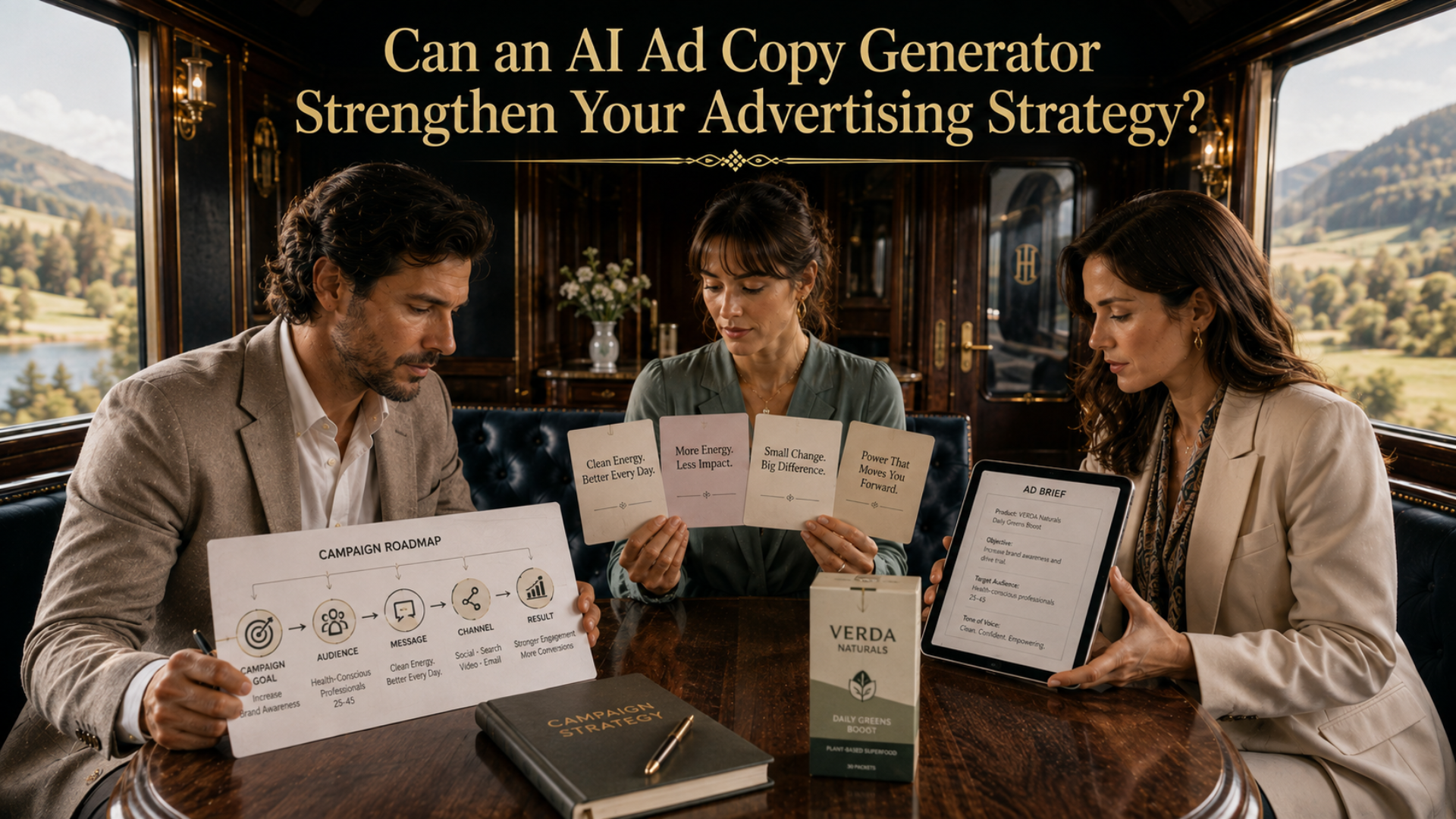
What if your advertising team could turn a campaign brief into several relevant headlines, persuasive descriptions, and calls-to-action in minutes? An AI Ad Copy Generator can help marketers accelerate the copywriting process, explore different messaging angles, and create variations for different audiences and platforms. But can it actually make advertising more effective? The answer is yes when AI-generated ideas are combined with human creativity, brand knowledge, and careful review.
What Is an AI Ad Copy Generator and How Does It Work?
An ***[AI Ad Copy Generator](https://adsgpt.io/blog/how-to-choose-and-use-an-ai-ad-creative-generator-as-a-performance-marketer/
)*** is a software tool that uses artificial intelligence to produce advertising text based on information such as a product, target audience, campaign objective, tone, and platform.
Instead of starting with a blank page, marketers can provide a basic brief and receive several possible copy variations.
These may include:
* Advertising headlines
* Product descriptions
* Promotional messages
* Calls-to-action
* Social media captions
* Search ad variations
* Short-form promotional copy
* Benefit-focused messaging
The main advantage is not simply producing text faster. It is the ability to explore multiple creative directions quickly and identify which ideas deserve further refinement.
How Can AI Make Advertising Copy More Relevant?
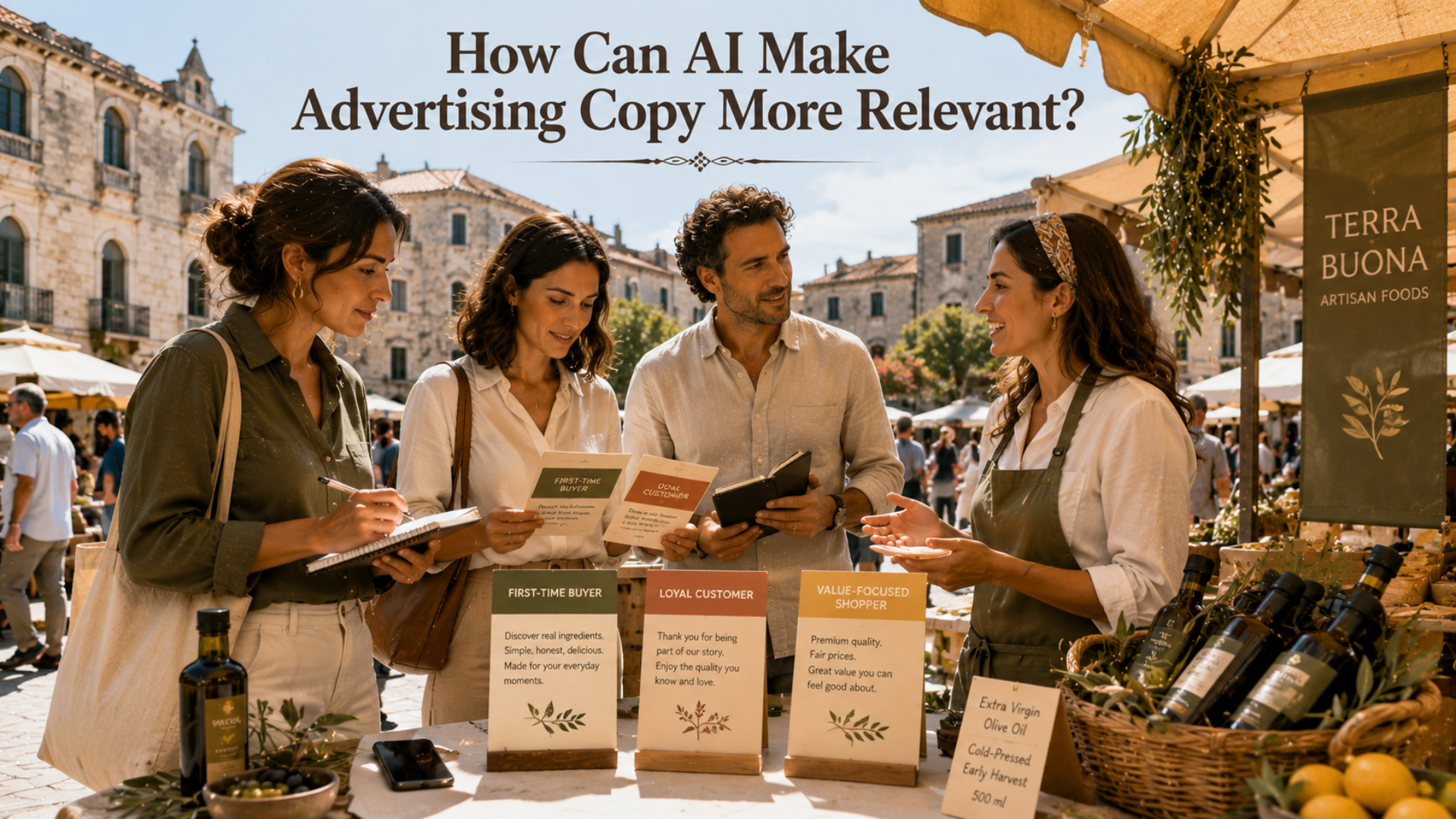
Effective advertising needs to communicate value quickly. A strong message should answer an important customer question: Why should I care about this product or service?
AI can help marketers experiment with different approaches to that question.
For example, a campaign could emphasize:
1. A customer benefit – explaining how the product solves a problem.
2. An emotional outcome – connecting the product with a desired feeling or experience.
3. A practical feature – highlighting something distinctive about the offering.
4. A promotional incentive – emphasizing a discount, limited-time offer, or special benefit.
5. A direct action – encouraging the audience to purchase, register, download, or learn more.
This flexibility can be particularly valuable when marketers are trying to understand which message resonates most strongly with a particular audience.
How Does AI Fit Into a Content Marketing Strategy?
Advertising copy should not exist separately from the rest of a brand's communication. Headlines, social posts, landing pages, email campaigns, and promotional content should work toward a consistent message.
That is where an AI-supported *****[content marketing strategy](https://adsgpt.io/blog/content-marketing-strategy/
)***** can become useful.
Marketers can use AI to adapt a central campaign idea into different formats while maintaining the same core positioning. For instance, one product benefit could become a search advertisement, a social caption, a landing-page headline, and a promotional email introduction.
However, consistency still requires human oversight. AI may generate several technically correct variations, but marketers must determine whether those messages accurately represent the brand.
Why Human Review Still Matters
AI can produce polished language, but polished language does not automatically mean effective advertising.
Human reviewers should check:
* Accuracy: Are product claims correct?
* Brand voice: Does the message sound like the company?
* Audience relevance: Is the wording appropriate for the intended customer?
* Clarity: Can the benefit be understood immediately?
* Compliance: Does the advertisement avoid unsupported or misleading claims?
* Originality: Does the copy feel distinctive rather than generic?
Human review transforms AI-generated suggestions into communication that is more credible and strategically useful.
Can AI Help Marketers Test More Advertising Ideas?
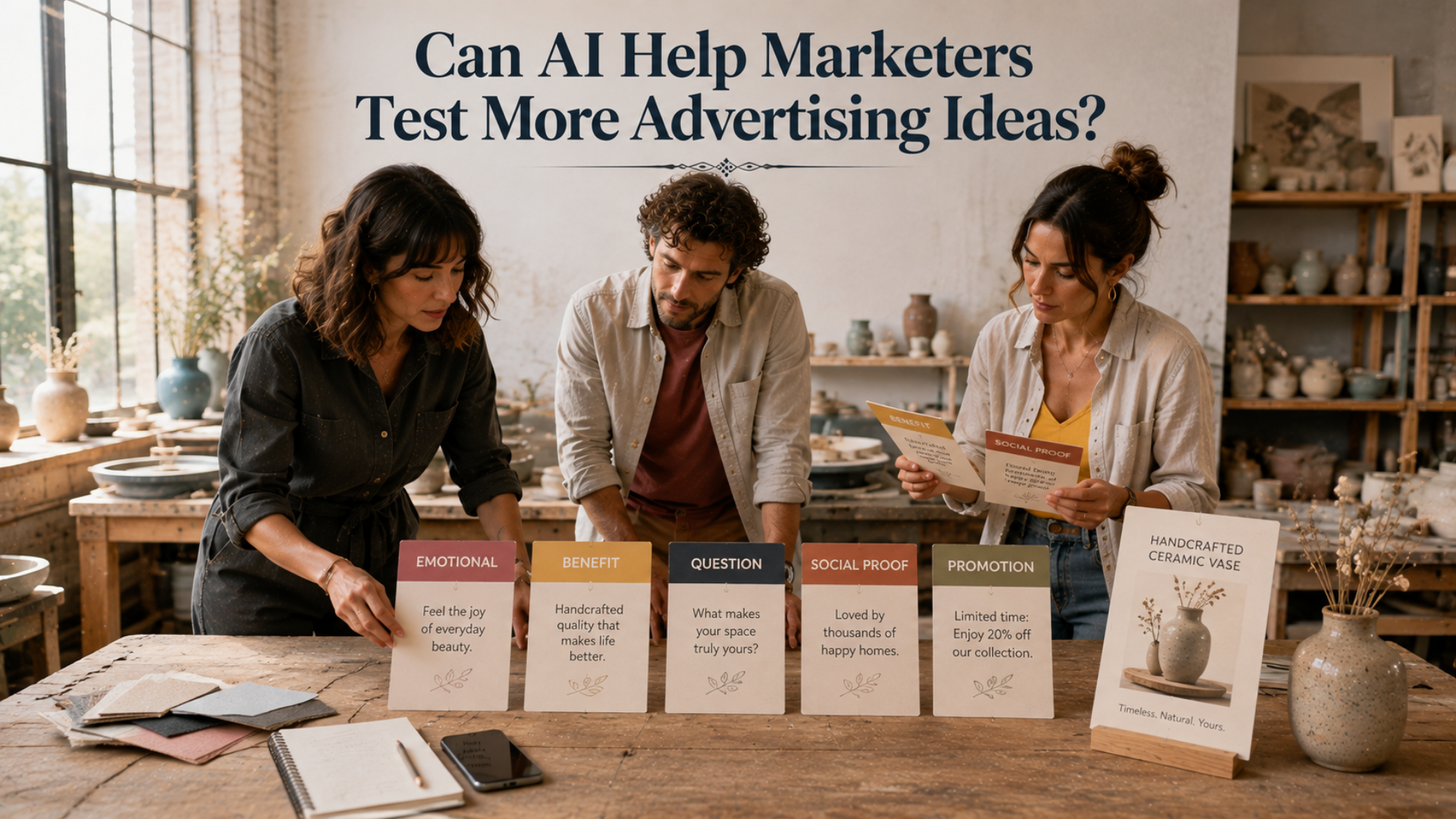
One of the biggest advantages of AI-assisted copywriting is rapid experimentation.
Instead of developing one headline and using it everywhere, marketers can create several alternatives based on different messaging angles. They can then test these versions through campaign performance data.
Useful measurements may include:
* Click-through rate
* Engagement rate
* Conversion rate
* Cost per acquisition
* Landing-page interactions
* Ad relevance
* Audience response
The results can help marketers understand which messaging approach deserves additional investment.
AI therefore becomes part of an iterative creative process rather than a replacement for advertising expertise.
How Can AI Support Video and Social Advertising?
Modern campaigns often need content that works across several channels. A single advertising concept may need to appear in different lengths, formats, and tones.
For video campaigns, AI can assist with short scripts, opening hooks, product benefits, captions, and calls-to-action. For social platforms, it can help marketers generate variations suited to different audiences and content styles.
For example, ***[YouTube ads](https://ivebo.co.uk/read-blog/267261
)*** may require a strong opening that captures attention quickly, while other social formats may depend more heavily on concise captions and visually compatible messaging.
The important principle is adaptation without losing the campaign's central idea.
How Should Marketers Use AI Responsibly?
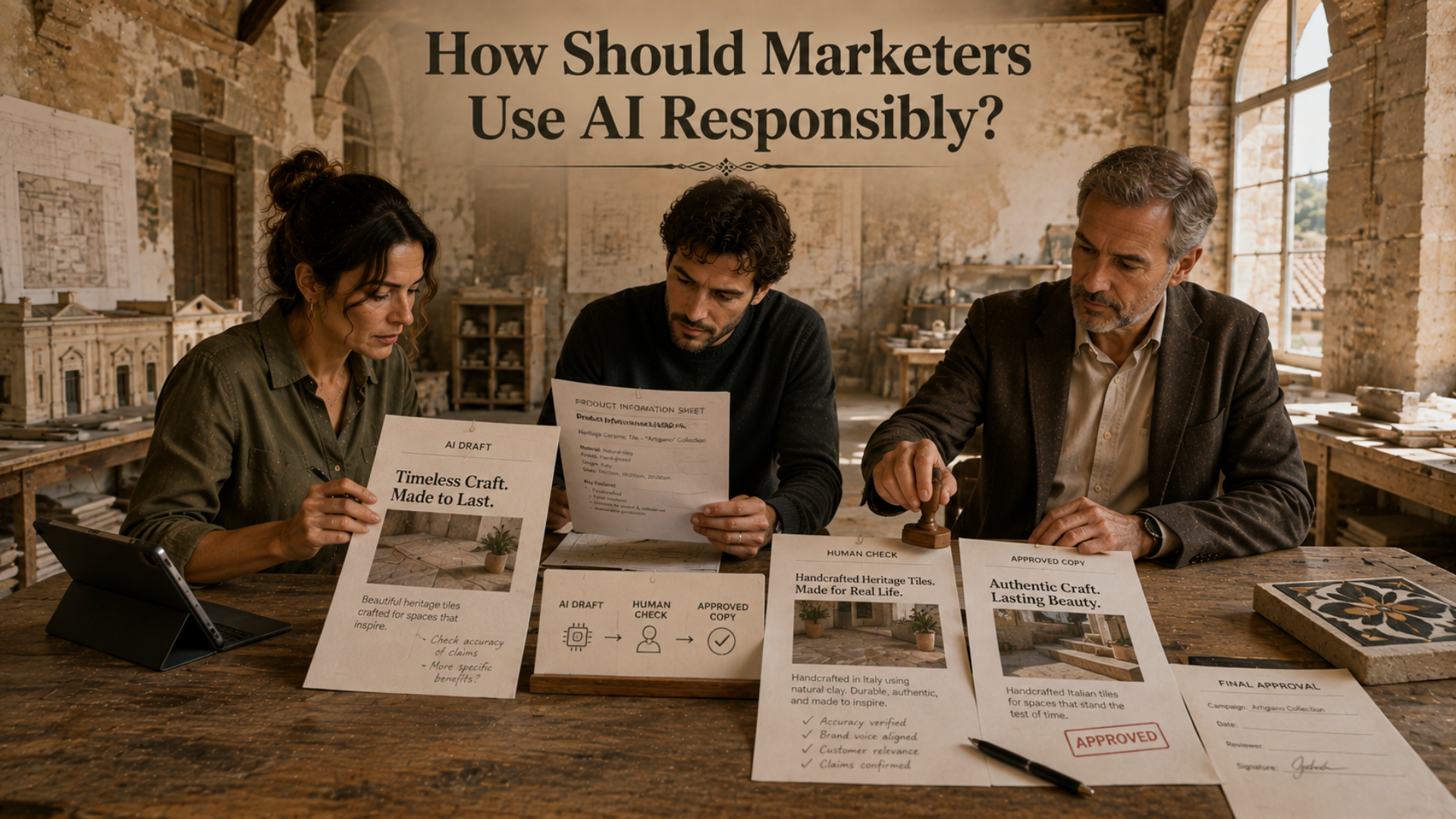
The strongest results usually come from treating AI as a creative assistant rather than an autonomous advertising department.
A practical workflow can look like this:
1. Define the campaign objective.
2. Identify the audience and customer problem.
3. Provide clear product and brand information.
4. Generate multiple copy directions.
5. Select the strongest concepts.
6. Edit the language for brand voice and accuracy.
7. Test different versions.
8. Analyze performance.
9. Refine future campaigns based on results.
This approach combines automation with strategic judgment, giving marketers greater creative flexibility without sacrificing accountability.
What Are the Main Benefits?
When used appropriately, AI-assisted advertising can help businesses:
* Speed up initial ideation.
* Reduce repetitive copywriting tasks.
* Generate more creative alternatives.
* Adapt messaging across platforms.
* Support faster campaign experimentation.
* Give smaller marketing teams additional creative capacity.
* Make it easier to refine messages based on performance.
The technology is most valuable when it expands the number of ideas a team can explore while leaving important decisions to experienced marketers.
You can also watch: ***[AdsGPT Full Walkthrough: Create 100+ Ad Variations in Minutes](https://youtu.be/RfU6DBy0f2k?si=ml6iKZq_aUmRhHLy
)***
Summary
An ***[AI Ad Copy Generator](https://adsgpt.io/blog/how-to-choose-and-use-an-ai-ad-creative-generator-as-a-performance-marketer/
)*** can make advertising workflows faster and support broader creative experimentation. Its real value comes from helping marketers move beyond a single idea and explore multiple ways to communicate the same customer benefit. With accurate inputs, thoughtful editing, performance testing, and human review, AI can become a practical part of modern advertising.
Frequently Asked Questions
Can AI write advertising copy from scratch?
Yes. AI can generate headlines, descriptions, promotional messages, and calls-to-action from a suitable campaign brief.
Is AI-generated advertising copy ready to publish immediately?
Not always. Human review is recommended to verify accuracy, brand consistency, originality, and compliance.
Can AI create different versions of the same advertisement?
Yes. It can generate variations based on different audiences, tones, benefits, formats, and calls-to-action.
Does AI replace professional copywriters?
AI can reduce repetitive tasks and accelerate ideation, but strategic thinking, creative judgment, brand understanding, and final editing remain important.
Can AI help improve advertising performance?
It can support performance improvement by enabling faster creative testing and message refinement, although actual results depend on the campaign, audience, offer, platform, and execution.