What Is Healthcare RCM and How Does It Work?
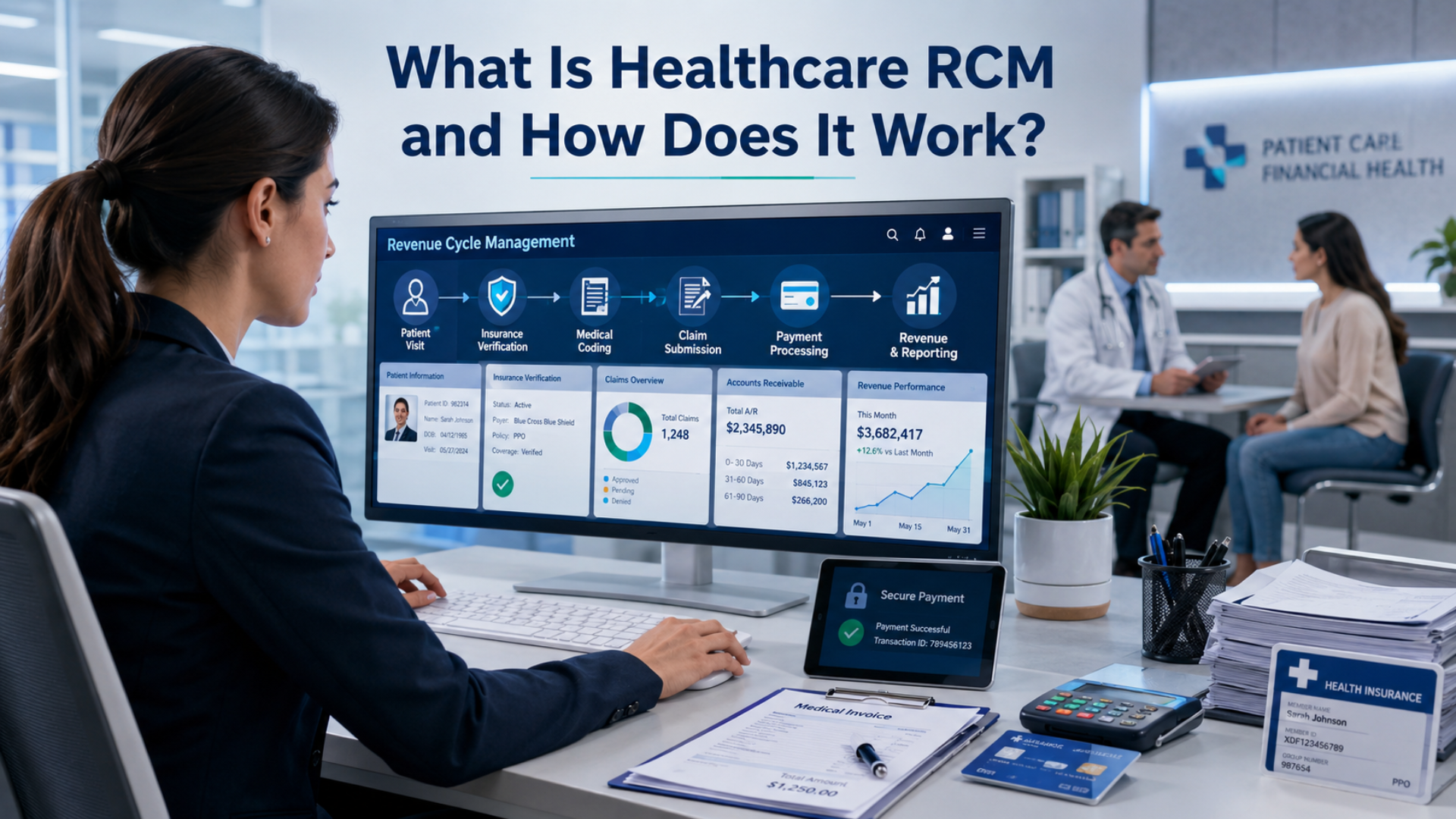
Healthcare providers need more than excellent clinical care to operate successfully. They also need an efficient financial process that ensures services are accurately billed, claims are processed on time, and payments are collected properly. This is where Healthcare RCM (Revenue Cycle Management) becomes important.
***[Healthcare RCM](https://medcore.software/blog/healthcare-rcm/)*** is the process of managing the financial journey of a patient's healthcare service, from appointment scheduling and registration to insurance verification, medical billing, claim submission, payment collection, and account follow-up.
What Is Healthcare RCM?
Healthcare RCM is a structured process that helps healthcare organizations manage revenue generated from patient services. It connects clinical, administrative, billing, and financial activities to ensure healthcare providers receive accurate and timely payments.
In simple terms, Healthcare RCM manages everything that happens financially before, during, and after a patient receives healthcare services.
An effective RCM process can help hospitals, clinics, medical practices, and other healthcare organizations improve cash flow, reduce billing errors, minimize claim denials, and make financial operations more efficient.
How Does Healthcare RCM Work?
Healthcare RCM generally follows a series of connected steps. Each stage contributes to the successful collection of payment for healthcare services.
1. Patient Registration
The process usually begins when a patient schedules an appointment or registers with a healthcare provider.
Important information such as the patient's name, contact details, insurance information, demographic details, and other relevant information is collected. Accurate registration helps prevent errors later in the billing and claims process.
2. Insurance Verification
Healthcare providers verify the patient's insurance coverage before providing services.
This process can confirm details such as eligibility, coverage limitations, copayments, deductibles, and authorization requirements. Early verification can reduce unexpected billing problems and prevent avoidable claim issues.
3. Appointment and Service Management
The patient's appointment and healthcare services are documented within the system. The provider records the services delivered during the visit.
Accurate documentation is important because the information eventually supports medical coding, billing, and insurance claims.
4. Medical Coding
Medical coding converts diagnoses, procedures, treatments, and other healthcare services into standardized codes.
Accurate coding is essential for appropriate billing and reimbursement. Coding errors can result in incorrect claims, payment delays, or claim denials.
5. Charge Capture
Charge capture ensures that all billable services provided to the patient are properly recorded.
If a service is missed during charge capture, the healthcare organization may lose revenue. Automated systems can help identify missing or inconsistent charges and improve billing accuracy.
6. Claim Creation and Submission
Once services are coded and charges are captured, a claim is created and submitted to the appropriate insurance payer.
Claims generally contain information about the patient, provider, diagnosis, procedures, charges, and insurance coverage. Clean and accurate claims have a better chance of being processed without unnecessary delays.
7. Claim Processing and Denial Management
Insurance companies review submitted claims and determine the appropriate reimbursement.
Some claims may be rejected or denied because of incorrect information, missing documentation, coding issues, eligibility problems, or authorization requirements. RCM teams analyze these issues, correct errors, and resubmit eligible claims.
8. Payment Posting
After a claim is processed, payments from insurance companies and patients are recorded in the healthcare organization's financial system.
Accurate payment posting helps maintain correct patient account balances and gives providers better visibility into their revenue.
9. Patient Billing and Collections
Patients may have financial responsibilities such as copayments, deductibles, coinsurance, or other charges.
Healthcare RCM includes generating patient statements, communicating outstanding balances, and providing convenient payment options. A clear and transparent billing experience can also improve patient satisfaction.
10. Reporting and Revenue Analysis
The final stage involves analyzing financial and operational data.
Healthcare organizations can monitor metrics such as claim denial rates, days in accounts receivable, collection rates, outstanding balances, payment delays, and overall revenue performance.
These insights can help identify problems and improve the RCM process over time.
Why Is Healthcare RCM Important?
Efficient revenue cycle management is important because financial problems can affect the overall operation of a healthcare organization.
A well-managed RCM process can help providers:
Improve cash flow by accelerating payment collection.
Reduce claim denials by identifying billing and documentation errors.
Increase billing accuracy through standardized processes.
Reduce administrative workload by automating repetitive financial tasks.
Improve payment visibility through centralized financial information.
Enhance the patient billing experience with clearer communication and easier payment options.
Identify revenue leakage by finding missed charges, unpaid claims, and outstanding balances.
What Are the Common Challenges in Healthcare RCM?
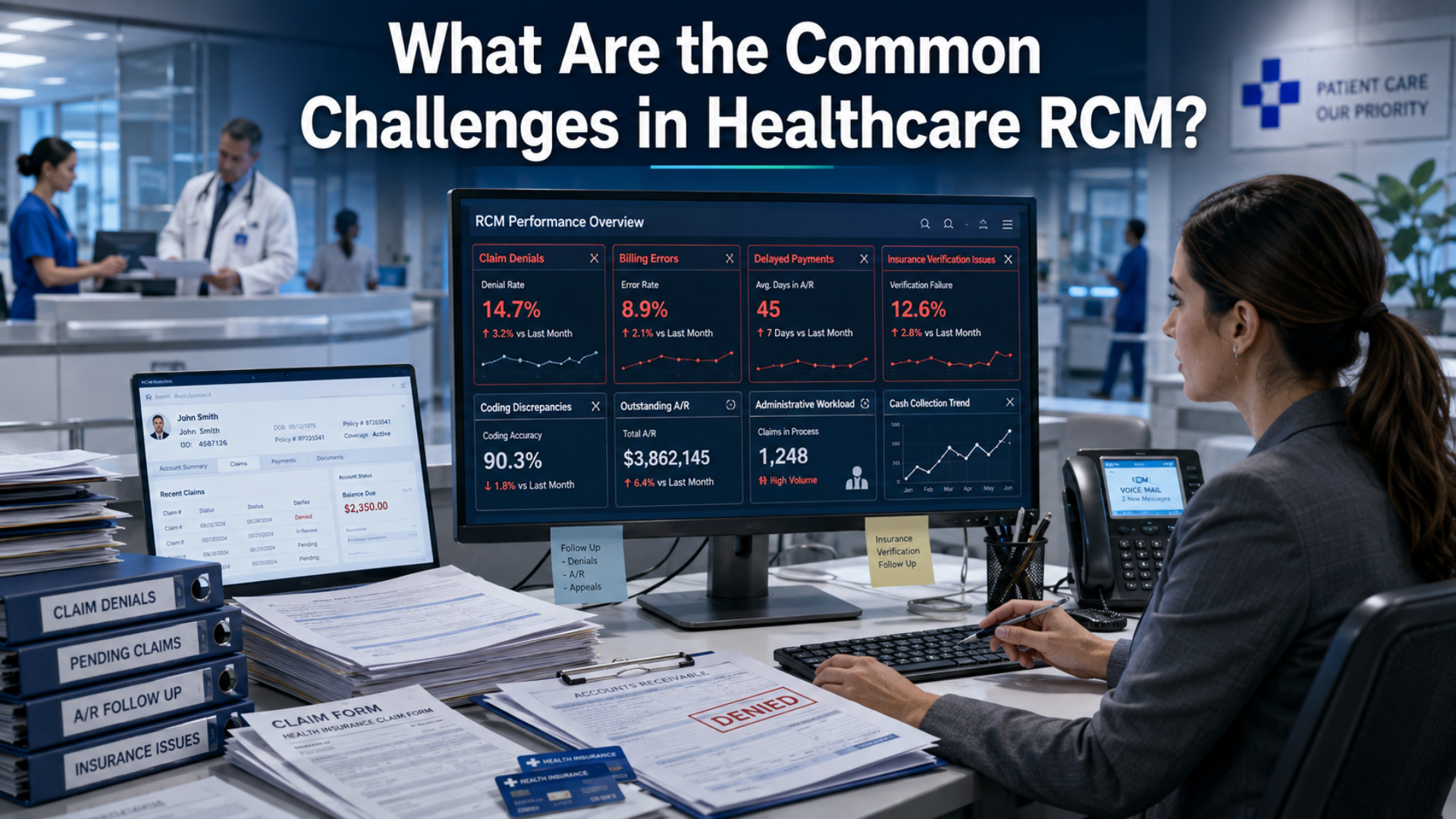
Healthcare organizations can face several challenges while managing their revenue cycle.
Common problems include inaccurate patient information, insurance eligibility issues, coding errors, incomplete documentation, claim denials, delayed payments, complicated payer requirements, and inefficient communication between departments.
Manual processes can make these challenges more difficult to manage. When financial information is spread across multiple systems, staff may also spend significant time searching for information and correcting inconsistencies.
What Are the Benefits of Automated Healthcare RCM?
Automated Healthcare RCM can provide several operational advantages. It can reduce repetitive manual work, improve data accuracy, accelerate claims processing, and help staff identify outstanding payments more quickly.
Automation can also provide real-time dashboards and reports, allowing administrators to understand financial performance and respond to problems before they become larger revenue issues.
How Does Healthcare RCM Affect Patient Experience?
Although RCM is primarily a financial process, it can directly influence the patient experience.
Confusing bills, unexpected charges, limited payment options, and delayed communication can create frustration. A streamlined RCM process can provide patients with clearer billing information, timely notifications, convenient payment methods, and better communication about their financial responsibilities.
This makes RCM an important part of the overall healthcare journey—not just a back-office financial function.
You can also watch: Everyone is working, but the system is not connected.
Summary
***[Healthcare RCM](https://medcore.software/blog/healthcare-rcm/)*** is the complete process of managing the financial side of healthcare services, from patient registration and insurance verification to coding, claim submission, payment collection, and financial reporting. When properly managed, RCM can help healthcare organizations reduce administrative inefficiencies, minimize claim denials, improve cash flow, and create a smoother billing experience for patients. As healthcare organizations increasingly adopt digital platforms, automation and AI are expected to play an increasingly important role in making revenue cycle management faster, more accurate, and more transparent.
Frequently Asked Questions
What does Healthcare RCM stand for?
Healthcare RCM stands for Healthcare Revenue Cycle Management. It refers to the processes used to manage healthcare payments from registration through final payment collection.
What is the main purpose of Healthcare RCM?
The main purpose is to ensure healthcare providers accurately bill for services, receive appropriate reimbursement, manage outstanding balances, and maintain a healthy revenue cycle.
What are the main steps in Healthcare RCM?
Key steps include patient registration, insurance verification, service documentation, medical coding, charge capture, claim submission, denial management, payment posting, patient billing, and financial reporting.